Restaurant cleaning service · Atlanta

Restaurant Cleaning Services in Atlanta

Detailed cleaning for dining rooms, bars, restrooms, kitchens, floors, and overhead surfaces, scheduled around your operating hours.

✓Written cleaning scope
✓Surface-aware methods
✓Scheduled around operations
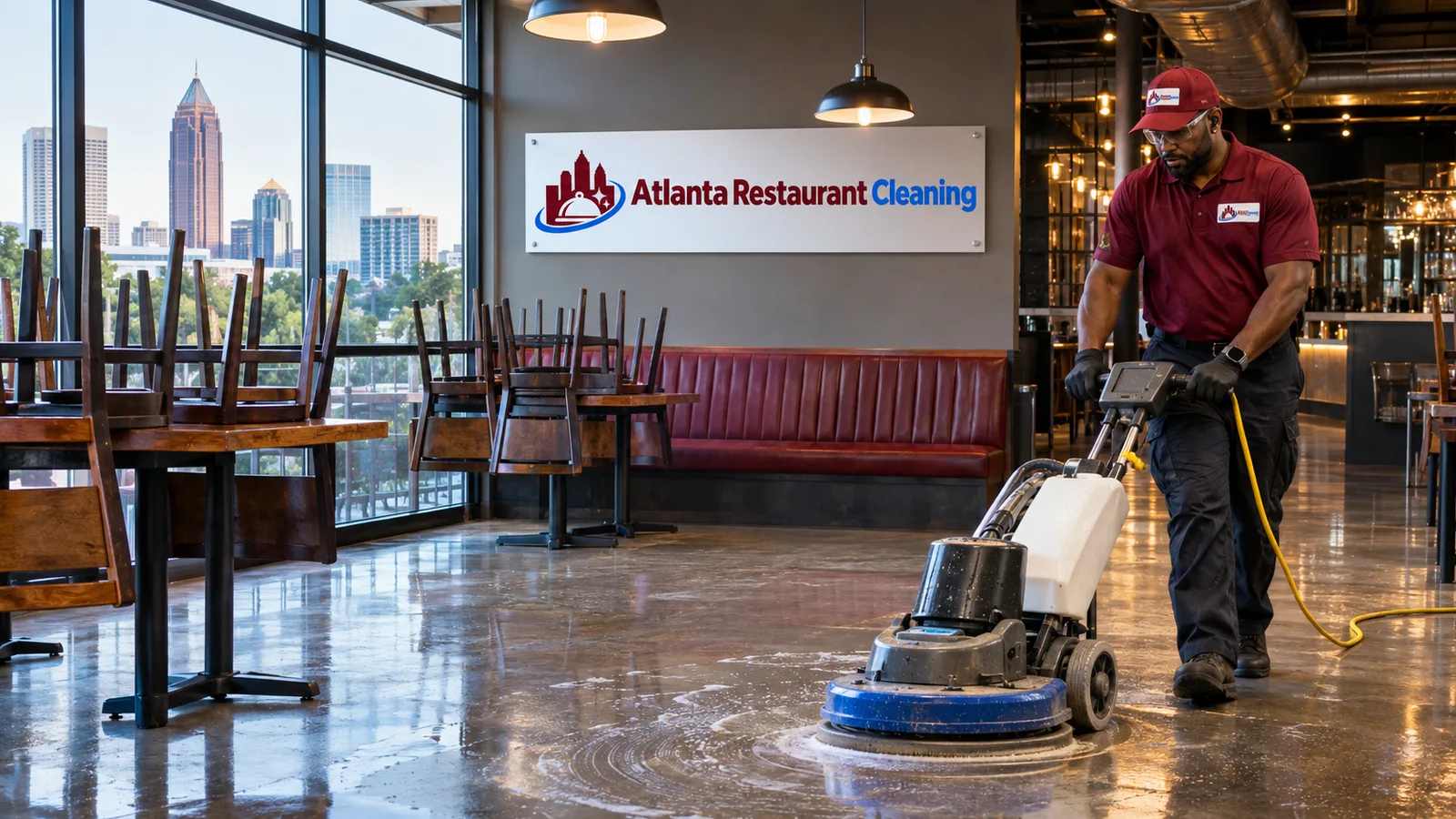
A professional cleaner using a commercial floor machine in a polished Atlanta restaurant dining room after closing.

Restaurant Cleaning Services Built Around Your Operation

Restaurant Cleaning Services should support the way your restaurant actually runs. Atlanta Restaurant Cleaning develops a defined scope around your floor plan, service schedule, surface materials, traffic, and closing procedures. The work can cover guest-facing spaces, employee areas, and back-of-house zones without treating every surface the same.

We are a professional restaurant company in Atlanta that plans recurring and detailed cleaning around the practical demands of food service. That means identifying touchpoints, separating restroom tools from dining-area equipment, selecting products compatible with each surface, and documenting what needs attention on every visit. Whether your restaurant needs routine overnight work or periodic deep cleaning, the scope is set before service begins.

Atlanta restaurants also contend with pollen, tracked-in grit, summer humidity, and rain that reaches entrances on guests' shoes. Entry mats, hard-floor edges, chair legs, baseboards, and glass near doors often need more attention during wet or high-pollen periods. A useful cleaning plan accounts for those conditions rather than relying on an unchanged checklist all year.

Request a Callback
Cleaning scope

Complete Front and Back of House Cleaning

Dining Area Cleaning

Restaurant Dining Room Cleaning can include tables, chairs, booths, ledges, partitions, baseboards, doors, glass, host stations, and accessible touchpoints. Crews work around upholstery, wood finishes, laminates, and other materials with suitable tools and products.

Restaurant Bar Cleaning

Bar work can cover counters, stools, rails, shelving exteriors, mirrors, footrests, floors, and reachable surfaces around service stations. Sticky residue and splash zones receive focused attention while glassware, beverages, and food-contact items remain under restaurant control unless the scope states otherwise.

Restroom Cleaning

Restaurant Restroom Cleaning Atlanta operators can schedule includes fixtures, partitions, mirrors, dispensers, doors, floors, and touchpoints. Tools and cloths are kept separate from those used in dining and food-service areas to reduce cross-contamination.

Back of House Cleaning

Restaurant Back Of House Cleaning Atlanta businesses request may include kitchen floors, walls, baseboards, employee areas, storage-area floors, and accessible equipment exteriors. Heavy grease accumulation, hood systems, ducts, and internal equipment cleaning should be identified separately during the walkthrough.

Restaurant Floor Cleaning

Floor care is matched to the material and soil load. Depending on the surface, work may involve vacuuming, flat mopping, deck brushing, auto-scrubbing, grout agitation, spot treatment, or periodic machine cleaning.

High Dusting

High Dusting addresses accessible vents, pipes, ledges, light housings, ceiling fans, beams, and other overhead surfaces where dust can collect. The crew confirms access, fixture stability, and protection for tables or equipment before work starts.

Front Of House Cleaning Guests Can Notice

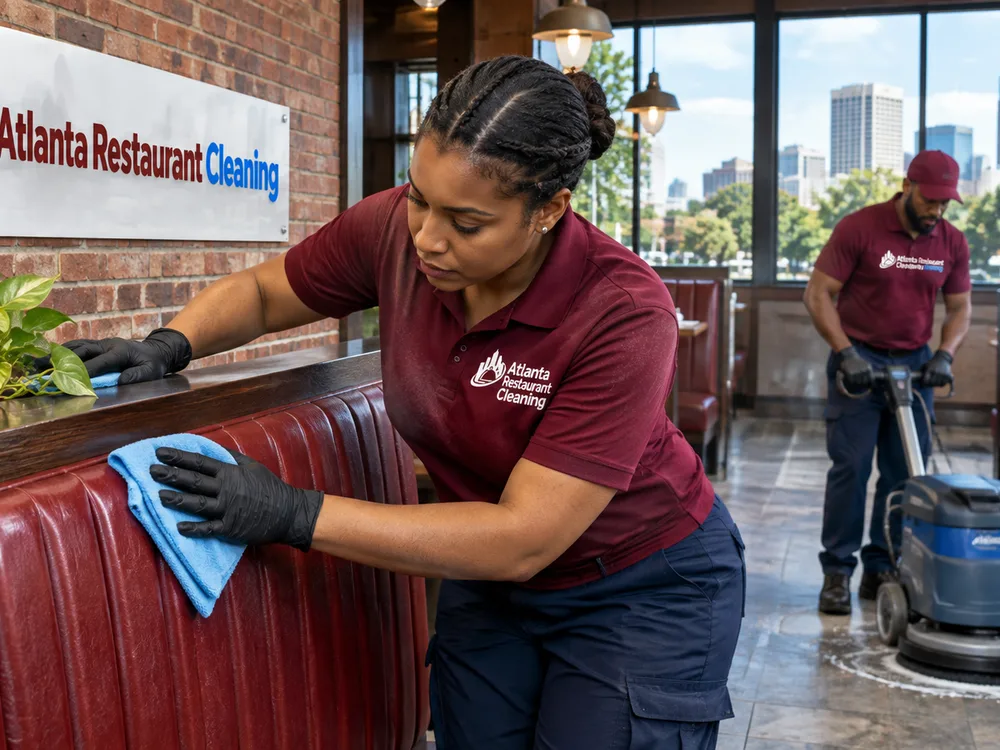
A cleaner wiping booth backs and detailed ledges in an Atlanta restaurant dining area while another worker services the floor.
Detailed dining-area work reaches the edges and touchpoints routine closing duties may miss.

Restaurant Front Of House Cleaning Atlanta establishments need is about consistency at eye level and underfoot. Smudged entry glass, crumbs along booth edges, dusty ledges, tacky bar rails, and soil around table bases can shape a guest's first impression before food arrives.

A front-of-house plan starts with how guests and staff move through the room. Midtown restaurants near offices and hotels may face concentrated lunch, dinner, and event traffic. Buckhead dining rooms often include bars, private dining spaces, glass, and detailed finishes that call for careful product selection. In Virginia-Highland and Inman Park, compact restaurant layouts can require staged cleaning so chairs, booths, and service stations are handled without blocking the crew's route.

Downtown venues near convention and sports destinations may experience sharp traffic changes tied to major events. West Midtown restaurants in converted commercial buildings may have exposed beams, ducts, or tall ceilings that add high surfaces to the scope. These operational differences affect staffing, equipment access, and the time needed after closing.

Cleaning methods

Floor Care, High Dusting, and Surface-Safe Methods

Restaurant Floor Cleaning begins with identifying the floor. Porcelain tile, quarry tile, sealed concrete, luxury vinyl tile, wood, and natural stone do not share one maintenance method. Crews also assess grout lines, grease migration, entry soil, transitions, floor drains, and tight areas beneath movable furniture. Product dwell time, agitation, soil recovery, and clean-water rinsing matter more than simply applying more chemical.

Greasy back-of-house tile may need degreaser and mechanical agitation, while a finished dining-room floor may require a neutral cleaner to protect its appearance. Natural stone can be damaged by acidic products, and excess water can harm some wood or resilient-floor installations. Slip risk must also be considered, so residues are removed and floors are allowed to dry before the space reopens.

High Dusting is usually planned as periodic work rather than an item rushed into every nightly visit. Overhead dust is removed with controlled tools such as extension dusters or HEPA-filtered vacuums where suitable. Dining tables, bar surfaces, and exposed equipment should be protected first because disturbing a high ledge can release debris into occupied areas. Access limits and ceiling height are confirmed during the walkthrough.

Request a Callback
Service process

How Restaurant Cleaning Is Planned

  1. Step01

    Walk Through the Restaurant

    The walkthrough identifies dining capacity, bar and restroom layouts, kitchen boundaries, flooring, high surfaces, access points, alarm procedures, and the hours available for cleaning. Problem areas such as greasy edges, grout buildup, or overhead dust are documented.

  2. Step02

    Define the Scope and Frequency

    The written scope separates recurring tasks from periodic work. Nightly or scheduled service may focus on floors, restrooms, touchpoints, and visible surfaces, while deep floor work and high dusting can follow a separate rotation.

  3. Step03

    Set Safety and Access Procedures

    The plan records entry instructions, restricted areas, chemical limitations, water access, waste procedures, and where equipment may be stored. Color-coded cloths or tools can help keep restroom work separate from dining and kitchen zones.

  4. Step04

    Clean in a Controlled Order

    Crews generally work from high surfaces toward lower ones and from cleaner zones toward heavier soil. Dry debris is removed before wet cleaning, and floor work is sequenced so completed areas are not immediately tracked over.

  5. Step05

    Review and Adjust

    Restaurant traffic and local conditions change. The scope can be reviewed when patio use increases, event traffic rises, pollen collects near entrances, or a floor needs more frequent machine cleaning.

Back of House Work Requires Clear Boundaries

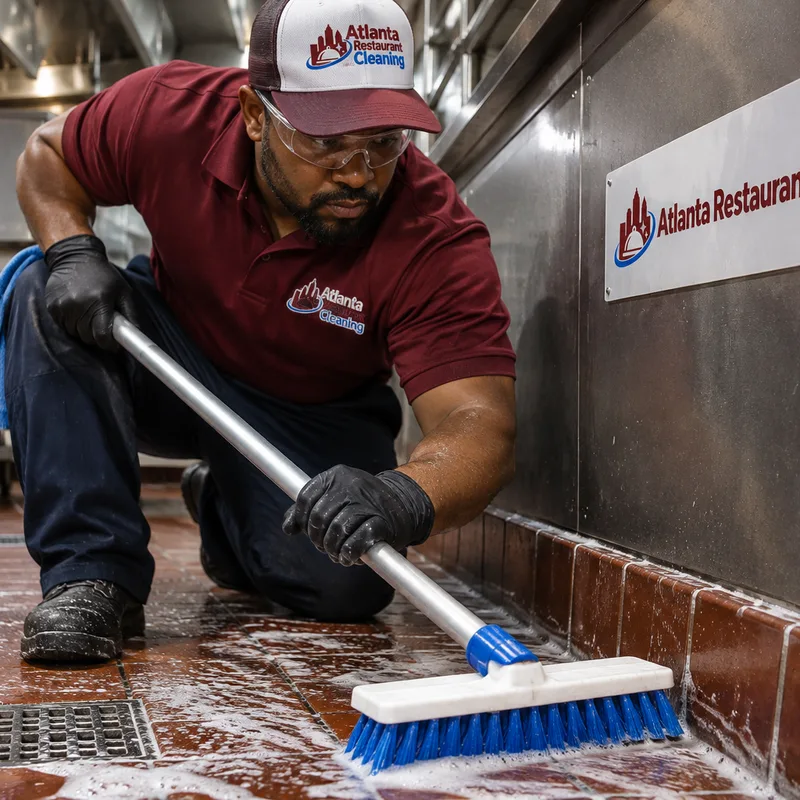
A trained cleaner using a deck brush on commercial kitchen tile near baseboards and floor drains, with food and movable equipment cleared from the work zone.
Back-of-house floor work targets grease-prone edges, grout, and traffic lanes.

Back-of-house cleaning should distinguish routine janitorial work from specialized kitchen services. Accessible floors, walls, baseboards, employee restrooms, break areas, storage floors, and equipment exteriors may fit a recurring scope. Internal appliance cleaning, grease-trap service, pest control, and exhaust-hood or duct cleaning are separate tasks that require specific procedures and, in some cases, specialized vendors.

Food-contact surfaces also need explicit handling instructions. Cleaning removes soil, while sanitizing follows with an appropriate product used at its labeled concentration and contact time. Those steps are related, but they are not interchangeable. Restaurant management should identify which food-contact surfaces remain the staff's responsibility and which, if any, are included in the cleaning agreement.

The restaurant should be ready for service when employees return. That depends on enough time for product dwell, rinsing where required, soil recovery, and floor drying. A very short overnight window may require rotating detail tasks or adding staff rather than compressing every item into an unrealistic schedule.

A written cleaning scope makes responsibilities, frequencies, access rules, and periodic detail work clear before the first service.

Call for a Free Quote
Common questions

Questions About Atlanta Restaurant Cleaning

How much do Restaurant Cleaning Services cost in Atlanta?+

Restaurant cleaning is usually quoted after a walkthrough because square footage alone does not show the full workload. Price is affected by dining-room size, restroom count, floor material, kitchen soil, bar areas, cleaning frequency, high-surface access, overnight timing, and whether periodic machine work is included. A compact dining room with light nightly duties requires a different crew plan than a high-volume venue with multiple restrooms and greasy back-of-house floors.

Can cleaning take place after the restaurant closes?+

Yes, service can be planned for an after-hours window when access and alarm procedures are clearly defined. The available time must allow for proper dwell time, rinsing or recovery where needed, and floor drying before Atlanta morning or lunch operations begin. The walkthrough should also establish who secures doors, handles keys, and responds to access problems.

How often should Restaurant Dining Room Cleaning be scheduled?+

Frequency should follow guest traffic, operating days, floor type, and the restaurant's own closing duties. Visible surfaces, floors, restrooms, and touchpoints may need attention each service night, while baseboards, chair legs, detailed glass, upholstery, and high surfaces can follow weekly, monthly, or condition-based rotations. Event-driven traffic near Downtown venues may justify temporary schedule changes.

Is Restaurant Bar Cleaning included with dining-area service?+

Bar cleaning can be included when the exact surfaces and responsibilities are listed in the scope. Counters, rails, stools, mirrors, floors, and shelving exteriors are common items. Beverage equipment, glassware, ice machines, drains, and food-contact components should be discussed separately so staff and cleaners know who handles each task.

Can you clean restaurant floors without damaging the finish?+

Yes, but the floor material and existing finish must be identified before choosing chemicals or equipment. Neutral cleaners may suit finished dining floors, while greasy quarry tile may require degreasing and agitation. Acidic products are generally unsuitable for acid-sensitive stone, and aggressive pads can damage softer finishes. A small test area may be appropriate when the floor's history is unknown.

What should be included in Restaurant Restroom Cleaning Atlanta service?+

A complete restroom scope commonly addresses toilets or urinals, sinks, counters, mirrors, partitions, dispensers, doors, touchpoints, waste receptacles, and floors. It should also state who restocks consumables and reports leaks or broken fixtures. Dedicated restroom tools should remain separate from equipment used in dining and food-service areas.

Do you provide High Dusting while the restaurant is operating?+

High Dusting is generally better scheduled when guests are absent and exposed surfaces can be protected. Overhead work can disturb settled debris, and ladders or extension tools require a controlled work area. Ceiling height, fixture access, beams, ducts, and sensitive equipment are reviewed first, especially in tall converted commercial spaces found in parts of West Midtown.

What should we do before the first cleaning visit?+

Confirm access, clear personal items and unsecured food, identify restricted equipment, and name a contact for questions. Restaurant management should also disclose delicate finishes, active leaks, unstable fixtures, recent floor coatings, and chemical restrictions. The first visit runs more smoothly when movable obstacles and staff responsibilities are settled during the walkthrough.

Plan a Cleaner Restaurant Around Your Schedule

Tell Atlanta Restaurant Cleaning about your dining room, bar, restrooms, kitchen areas, floors, and high surfaces. We will discuss the operating window and prepare a practical scope for recurring or periodic cleaning.