
Back-of-House Degreasing
Cleaning targets grease film and food soil on accessible floors, walls, prep areas, shelving, and exterior equipment surfaces. The method is matched to stainless steel, tile, sealed flooring, and other washable materials.
Serving Atlanta, Georgia & surrounding areas
Open 24/7
Keep your kitchen, dining room, restrooms, and service areas sanitary and ready for every shift with a cleaning plan built around your hours.
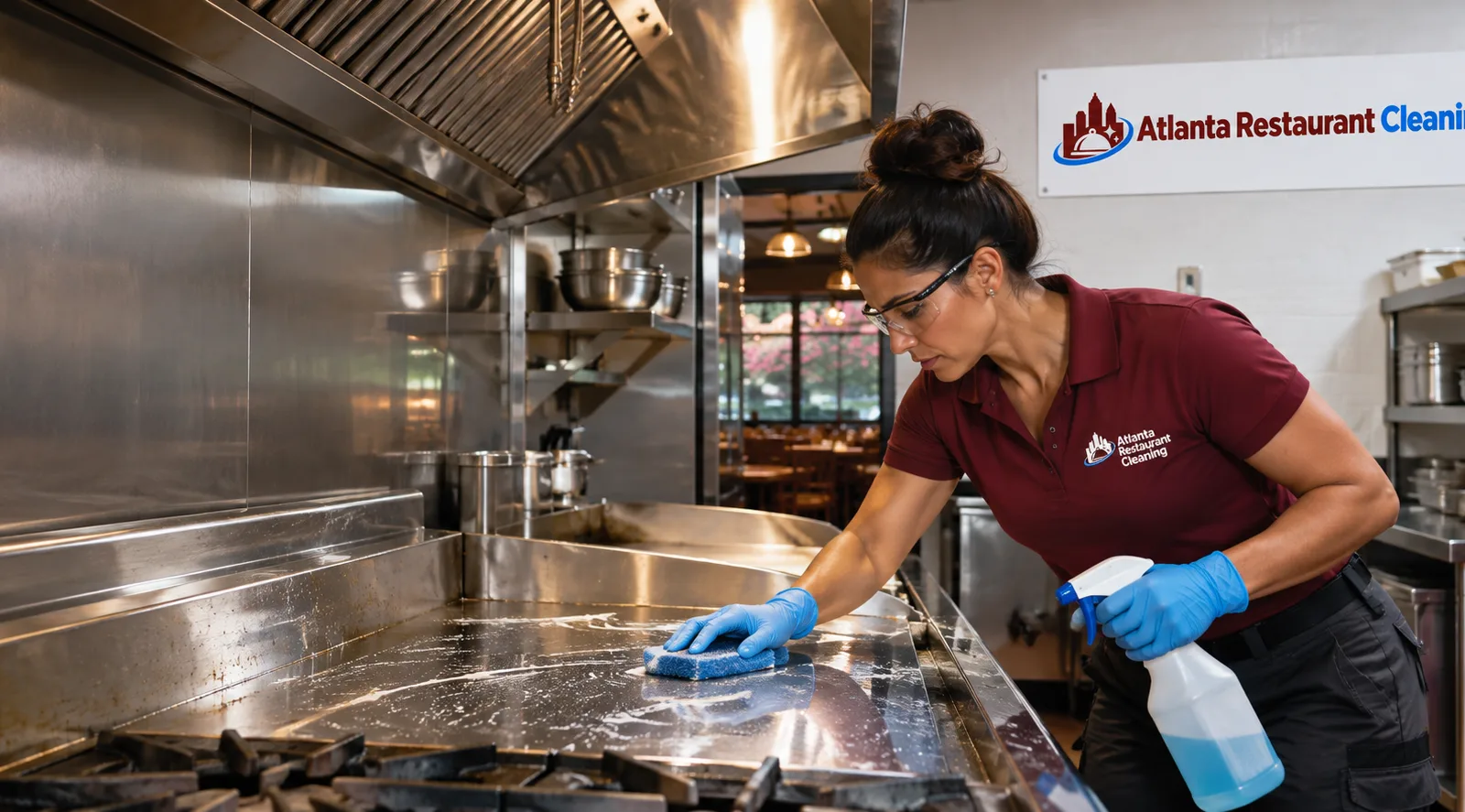
Restaurant Cleaning Roswell requires more than a quick wipe-down at closing. Grease settles on equipment and nearby surfaces, food debris collects beneath movable fixtures, and dining-room traffic leaves floors and touchpoints needing consistent attention. Atlanta Restaurant Cleaning builds the work around your restaurant's layout, operating schedule, and sanitation priorities.
Our team handles recurring and detailed cleaning for independent restaurants, cafés, bars, quick-service locations, and other food-service businesses. We agree on the scope before work begins, identify areas that need special attention, and schedule service to reduce interference with staff and guests. In Roswell, a restaurant company Atlanta homeowners rely on brings the same practical approach to local businesses through clear expectations, careful work, and direct communication.
Roswell has distinct restaurant settings. Canton Street in Historic Roswell has busy dining destinations in older commercial spaces, where compact kitchens and limited staging areas can shape the cleaning plan. Restaurants near Holcomb Bridge Road often have larger footprints, extended operating hours, and steady vehicle traffic. Around North Point Parkway, high-volume retail and dining activity can increase the need for dependable floor, restroom, and front-of-house cleaning. The scope should fit the property rather than force every restaurant into one checklist.
A complete scope may include front-of-house, back-of-house, restroom, and support spaces. Kitchen work can address floors, walls, washable surfaces, prep tables, sinks, exterior equipment surfaces, shelving, and accessible areas beneath movable items. Degreasing methods and dwell time are selected for the soil level and surface involved. Food-contact surfaces must receive appropriate cleaning and sanitizing treatment, while chemicals are used according to their labels and kept from exposed food, utensils, and ingredients.
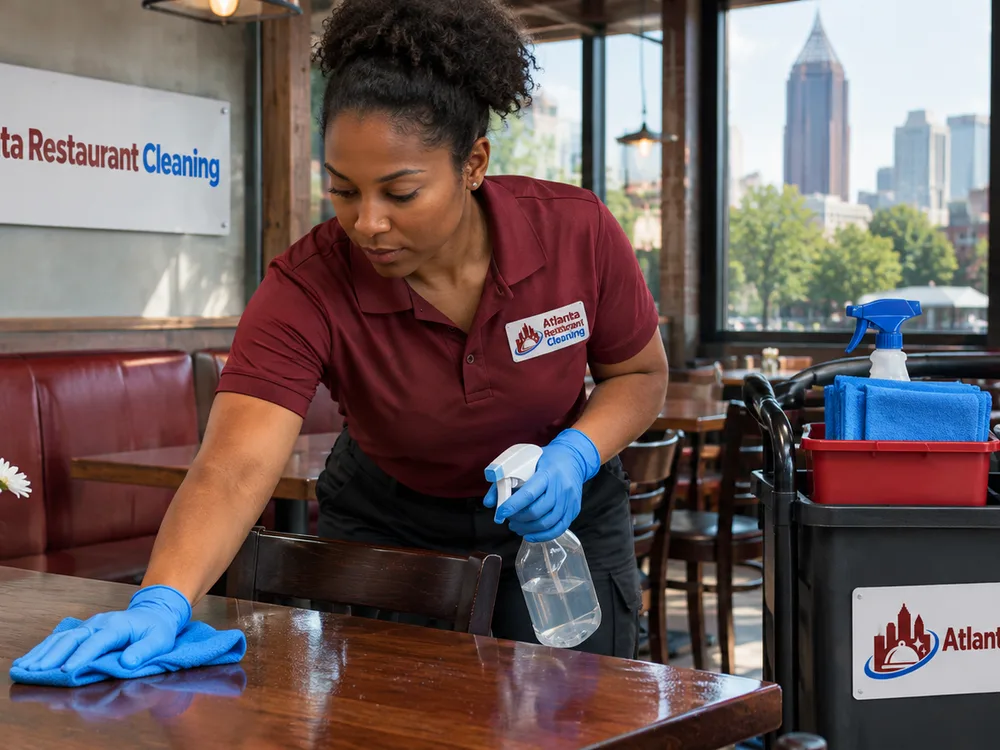
Dining-room service may include vacuuming or mopping floors, spot cleaning, wiping tables and seating as agreed, cleaning glass, and addressing high-touch points. Restrooms require separate tools and a controlled sequence to reduce cross-contamination. Color-coded microfiber cloths and mop equipment can help maintain that separation.
The written scope matters. Routine janitorial cleaning does not automatically include kitchen exhaust systems, internal ductwork, pest control, grease-trap pumping, or equipment repair. Those jobs involve different access, methods, or specialist providers. Defining exclusions early helps restaurant managers coordinate the work required for the whole facility.
Cleaning targets grease film and food soil on accessible floors, walls, prep areas, shelving, and exterior equipment surfaces. The method is matched to stainless steel, tile, sealed flooring, and other washable materials.
Floors, seating areas, glass, entry points, and agreed touchpoints are cleaned after service or during another approved window so the room is prepared for guests.
Fixtures, partitions, mirrors, floors, dispensers, and touchpoints receive a dedicated workflow. Restroom tools are kept separate from kitchen and dining-area equipment.
Edges, baseboards, accessible areas behind movable equipment, wall buildup, and other overlooked spots can be added on a rotating or scheduled basis.
A deeper reset can support a new opening, management transition, seasonal refresh, or return to service after approved maintenance work.
Managers receive a defined task list that identifies frequency, access requirements, exclusions, and any areas needing special instructions.
We review the kitchen, dining room, restrooms, entrances, storage areas, and access conditions. The walkthrough identifies surface types, grease accumulation, sensitive equipment, and spaces that staff must secure.
You receive a plan based on the tasks and frequency discussed. Service can be arranged around closing, prep periods, deliveries, alarm procedures, and other operational constraints.
Restaurant staff secure food and personal items as agreed. Cleaners then work through defined zones using task-appropriate chemicals, tools, dwell times, and floor procedures.
Completed areas are checked against the agreed task list. Any access problem, damaged surface, or condition outside the scope can be reported to the designated manager.
Traffic, menu changes, weather, and operating hours can alter cleaning needs. The frequency or rotation can be updated when recurring buildup shows that a task needs more attention.
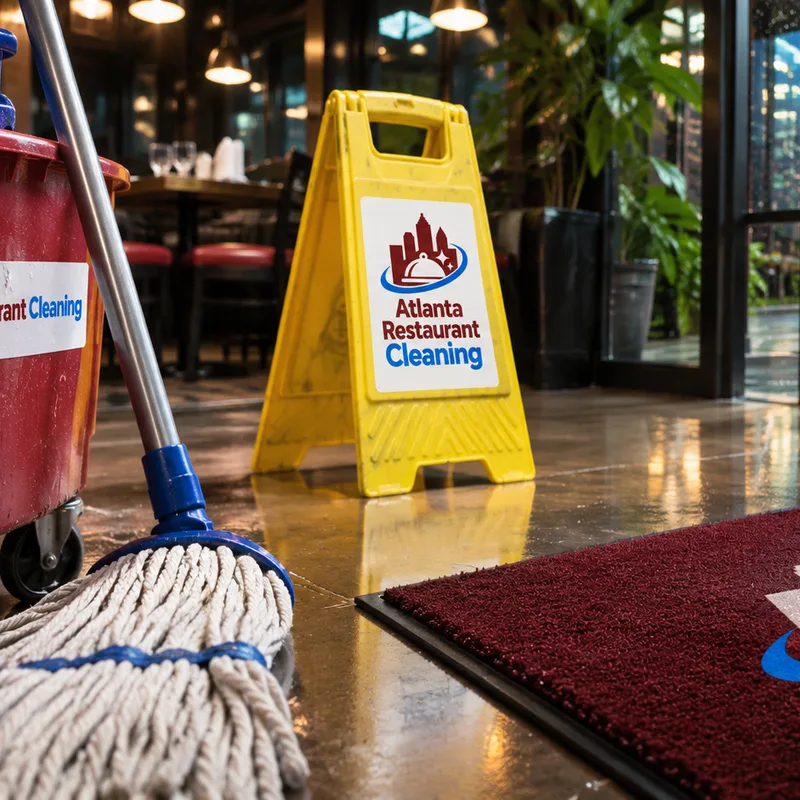
Warm, humid weather can bring moisture and tracked-in soil through restaurant entrances, while heavy rain can leave hard floors needing more frequent attention. Entry mats, wet-floor controls, and a practical floor schedule help manage these conditions without treating every visit as a full deep clean.
Historic Roswell restaurants may operate in converted or older buildings with narrow passages, uneven transitions, and limited room for equipment staging. A walkthrough is especially useful in those properties because access affects tools, timing, and what can safely be moved. Along Alpharetta Highway and Holcomb Bridge Road, restaurants may have broader dining rooms and larger parking-driven traffic patterns, making entrances, restrooms, and floor care major parts of the nightly plan.
Restaurant sanitation also depends on proper separation of tasks. Cleaning removes soil; sanitizing reduces microorganisms on an already cleaned surface when the correct product, concentration, and contact time are used. A disinfectant is not a substitute for removing grease or food residue first. Product labels and the restaurant's own food-safety procedures govern how chemicals are applied.
Restaurant cleaning quotes are difficult to compare when one covers only visible floors and restrooms while another includes detailed kitchen degreasing. A useful proposal identifies the rooms, tasks, frequency, service window, and exclusions. It should also clarify who moves equipment, who supplies consumables, and how staff provide after-hours access.
Frequency should follow use and soil load. Guest touchpoints and restrooms may need attention each service visit, while wall washing, baseboards, shelving, and accessible spaces behind equipment can follow a rotation. A restaurant with frying operations will usually require a different degreasing plan than a coffee shop with light food preparation. Square footage alone cannot capture that difference.
Atlanta Restaurant Cleaning is based at 299 Peters Street Southwest, Unit 4, Atlanta, Georgia 30313, and serves Roswell businesses with scopes built around actual operating conditions. Tell us your hours, cleaning concerns, and current routine. We can then identify what belongs in recurring service and what should be scheduled as periodic detail work.
Get a clear cleaning scope for your Roswell restaurant, including the work areas, service frequency, access needs, and exclusions before service begins.
Call for a Free QuoteRestaurant cleaning in Roswell is priced after reviewing the size, condition, frequency, and exact task list. A compact café needing routine floor and restroom service has a different labor requirement than a full-service restaurant needing detailed kitchen degreasing after closing. Equipment access, grease levels, operating hours, and requested frequency also affect the quote. A walkthrough provides the information needed for a written scope and accurate price.
Yes, after-hours cleaning can be planned when access, alarm procedures, closing duties, and the required completion time are agreed in advance. Historic Roswell locations with limited loading or staging space may require extra coordination. Managers should identify restricted areas, secure food and valuables, and provide a designated contact for access issues.
The right frequency depends on traffic, menu, hours, surface types, and what employees clean during each shift. High-use restrooms, entrances, and greasy kitchen floors may need frequent service, while baseboards, walls, and accessible areas behind equipment can be placed on a rotation. The schedule should be adjusted when recurring buildup appears between visits.
Food-contact surfaces can be included when the scope and restaurant procedures clearly define the work. Food, utensils, and ingredients must be protected or removed, and the selected products must be used according to label directions, including required concentration, contact time, and any rinse instructions. Cleaning must occur before sanitizing because sanitizer does not remove grease or food debris.
Internal exhaust hood, fan, and duct cleaning is not assumed to be part of routine restaurant cleaning. It is specialist work with different equipment and access requirements. Exterior hood surfaces and nearby washable areas may be included if they are identified in the scope, but managers should confirm exactly which exhaust components a provider is responsible for.
Secure exposed food, ingredients, utensils, cash, and personal items before service begins. Complete any agreed equipment shutdowns, mark surfaces that require special care, and keep access routes open. For restaurants near Canton Street or in older commercial spaces, confirming parking, entry, and equipment-staging instructions can prevent delays after closing.
A one-time deep clean can be scoped for an opening, reopening, management change, or scheduled reset. The walkthrough should determine whether the restaurant needs degreasing, floor work, restroom cleaning, interior glass, detailed edges, or accessible areas beneath movable equipment. Construction debris, exhaust cleaning, pest treatment, and equipment repair should be assigned separately unless specifically included.
Share your restaurant's layout, operating hours, problem areas, and preferred service frequency. Atlanta Restaurant Cleaning will help define a practical scope for your Roswell location.