
Dining and Guest Areas
Tables, chair surfaces, booths, host stands, ledges, entry glass, trash receptacles, and floors are cleaned according to the nightly checklist. Crews account for finish-sensitive materials and furniture placement.
Serving Atlanta, Georgia & surrounding areas
Open 24/7
Reliable nightly care for kitchens, dining rooms, restrooms, and guest-facing areas, completed around your operating schedule.
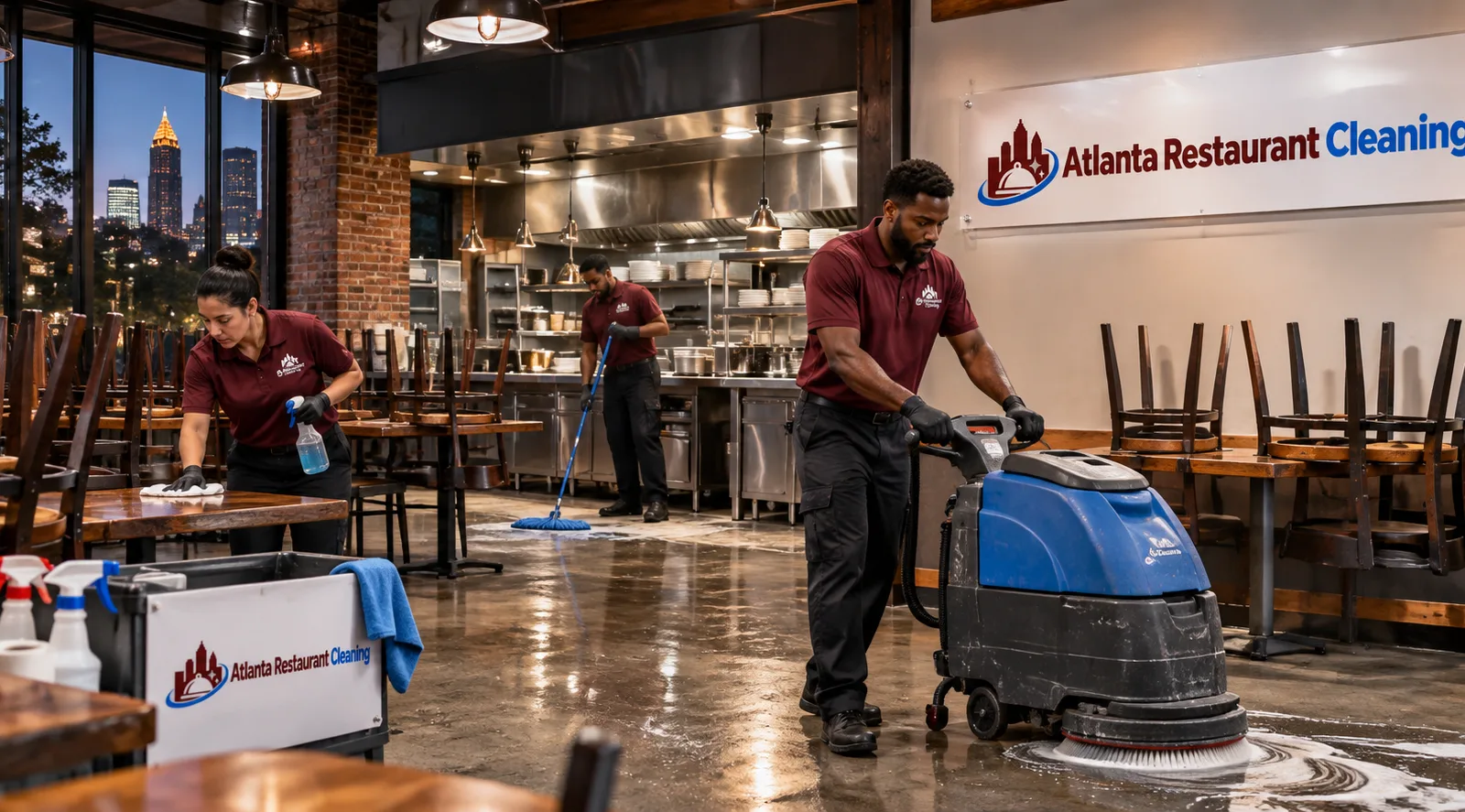
Overnight Restaurant Cleaning gives your staff a clean, orderly workplace at opening without interrupting dinner service or closing duties. Atlanta Restaurant Cleaning builds recurring scopes around the facility, hours, traffic, and division of responsibility between employees and the janitorial crew.
After guests leave, our team at a professional restaurant company in Atlanta, GA focuses on dependable execution. A written scope can identify what is cleaned every night, what rotates on a weekly schedule, which products are approved for each surface, and how completion concerns are reported. That detail matters when a restaurant has several zones, separate closing teams, or limited time between last seating and morning prep.
Atlanta restaurants face different operating conditions. Downtown and Mercedes-Benz Stadium event traffic can create sudden spikes in tracked-in soil and restroom use. Midtown dining rooms often work around late service and dense pedestrian traffic. Buckhead restaurants may have polished finishes, glass, and high-touch guest areas that need surface-specific care. In Old Fourth Ward and West Midtown, busy patios and converted commercial spaces can add exterior entry soil or irregular floor plans. The cleaning plan should reflect the actual building and schedule rather than rely on a generic checklist.
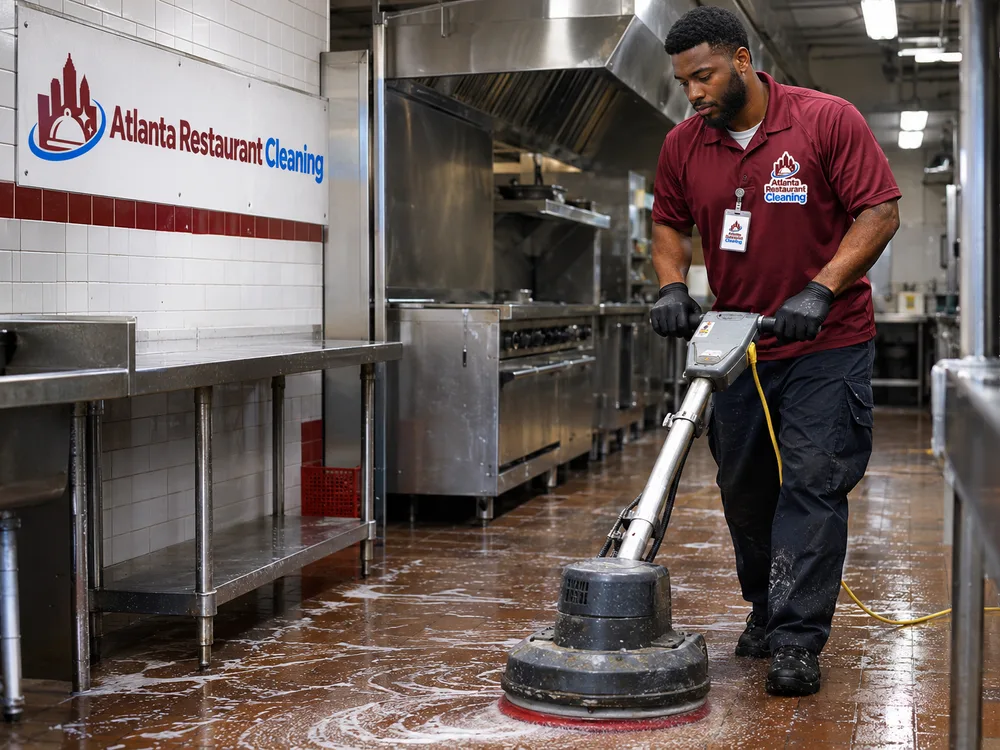
A complete nightly scope starts with the areas that affect opening readiness. In dining rooms, crews can wipe tables and chairs, clean host stations, spot-clean partitions, remove trash, vacuum carpet, and mop hard floors. Entry glass, door handles, ledges, and other high-touch points receive attention according to the agreed checklist. Floor care should match the material, whether the room has luxury vinyl tile, quarry tile, sealed concrete, ceramic tile, or carpet.
Back-of-house work may include sweeping and degreasing floors, cleaning floor mats, wiping washable exterior surfaces on equipment, cleaning sinks, emptying waste, and addressing splash zones. Food-contact surfaces require an approved clean-and-sanitize procedure and must follow the restaurant's product requirements. Staff should secure food, chemicals, knives, and personal items before service begins. Overnight janitorial work does not replace hood, duct, fire-suppression, pest-control, or equipment-maintenance contractors.
The best Restaurant Night Cleaning scope also defines exclusions. Moving hot equipment, opening energized appliances, cleaning inaccessible interiors, and handling active grease interceptors require separate authorization or specialist service. Clear boundaries protect the facility, the restaurant team, and the cleaning crew.
Tables, chair surfaces, booths, host stands, ledges, entry glass, trash receptacles, and floors are cleaned according to the nightly checklist. Crews account for finish-sensitive materials and furniture placement.
Restrooms are cleaned and disinfected with attention to toilets, urinals, sinks, mirrors, partitions, dispensers, touchpoints, waste, and floors. Consumables can be restocked when the restaurant supplies them and includes restocking in the scope.
Scheduled tasks may cover floors, mats, sinks, splash areas, washable equipment exteriors, employee areas, and waste stations. Degreaser choice, dwell time, and rinsing must suit the soil and surface.
Nightly sweeping, vacuuming, damp mopping, and spot treatment control routine soil. Periodic machine scrubbing, carpet extraction, or finish maintenance can be scheduled separately when the flooring requires it.
Crews empty designated containers, replace liners, and move tied waste to the restaurant's approved collection point. The scope should state who handles cardboard, cooking oil, broken glass, and unusually heavy refuse.
Door hardware, rails, payment-area surfaces, switches, and other frequently handled points can be included in a defined disinfection routine. Products need the correct label use and contact time.
We review the dining room, kitchen access, restrooms, floors, waste route, storage limitations, alarm procedures, and the time available between closing and opening.
The proposal separates nightly duties from rotating work and periodic floor care. It also records access instructions, supply responsibilities, exclusions, and any areas that require manager approval.
Before the first visit, both sides confirm keys or access codes, alarm steps, chemical-storage rules, communication contacts, and the condition in which restaurant staff will leave work areas.
The crew follows the site checklist after closing, secures designated doors, and reports damage, access problems, unusual soil, low consumables, or tasks that could not be completed safely.
Management feedback and inspections are used to correct missed details and adjust the scope when hours, traffic, menus, flooring, or restaurant procedures change.
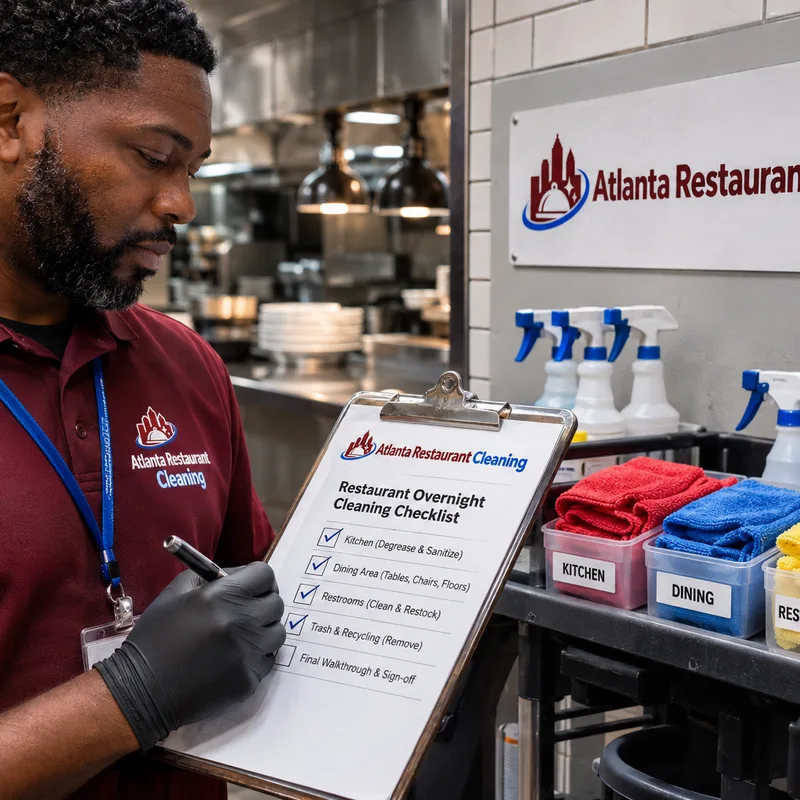
A dependable restaurant janitorial company asks detailed questions before setting a price. How late can the crew enter? When does prep begin? Which areas remain occupied after closing? Who breaks down mats and moves chairs? Where may chemicals and equipment be stored? The answers determine staffing, sequence, and whether the proposed cleaning window is realistic.
Ask prospective providers for a task-specific scope rather than a broad promise to clean the restaurant. The document should identify service frequency, floor methods, restroom duties, waste handling, consumable responsibilities, inspection practices, and the process for reporting an issue. Restaurants with several locations should also clarify whether each facility has its own checklist and access record.
Atlanta's warm, humid periods can increase the need for careful odor control, prompt waste removal, and thorough attention around drains and mats. Heavy pollen and summer rain also bring soil through entrances. Those conditions do not require exaggerated claims or harsh chemicals. They require sensible mat care, frequent floor attention, proper dilution, and enough time for surfaces to dry before morning traffic.
Recurring overnight restaurant cleaning in Atlanta typically ranges from about $1,500 to $6,000 or more per month. A small dining room with limited back-of-house work may fall near the lower end, while a large, high-volume restaurant with nightly kitchen, restroom, and floor care can cost more.
Final pricing depends on square footage, service frequency, cleaning window, floor materials, grease levels, restroom count, equipment access, waste duties, consumables, and periodic deep cleaning. A walkthrough is needed to measure the workload, and the exact cost is confirmed in a written proposal.
Restaurant Janitorial Cleaning requires more than ordinary office-cleaning habits. Cleaning removes soil. Sanitizing reduces microorganisms on food-contact surfaces to levels considered safe under the product label and applicable procedures. Disinfecting is generally used on appropriate non-food-contact surfaces. These terms are not interchangeable, and each chemical has its own dilution, dwell time, surface compatibility, and rinse directions.
Color-coded microfiber can reduce the chance that restroom cloths are used in dining or kitchen zones. Separate tools should be assigned to restrooms and food-preparation areas. Safety Data Sheets should be accessible for workplace chemicals, and products must never be mixed unless their labels explicitly permit it. Wet-floor signs and a logical work sequence help manage slip risk while floors dry.
Atlanta restaurants operate under the Georgia food-service regulatory framework and local inspections may be conducted by the Fulton County Board of Health within its jurisdiction. An overnight crew supports cleanliness, but restaurant management remains responsible for food safety, employee practices, equipment condition, pest prevention, and compliance. A janitorial checklist should support those controls without suggesting that routine cleaning guarantees an inspection result.
Get a written nightly scope built around your closing time, morning prep, floor materials, restrooms, and division of staff responsibilities.
Call for a Free QuoteYes, service can be scheduled around the agreed closing and opening window if the available time matches the workload. The walkthrough should account for late tables, bartender closeout, kitchen breakdown, alarms, delivery access, and morning prep. Event traffic near Downtown venues may also require a flexible arrival plan on especially busy nights.
The right frequency depends on operating days, guest volume, menu, floor materials, and what employees clean during each shift. Many active facilities need dining areas, restrooms, waste points, and floors addressed every operating night, while detail work such as baseboards, carpet extraction, and machine scrubbing can follow a rotating schedule.
Restocking can be included when the restaurant provides the paper products, soap, liners, and other consumables specified in the agreement. The scope should identify each dispenser, storage location, minimum-stock reporting method, and whether the overnight crew or restaurant manager handles damaged dispensers.
Crews can clean agreed exterior surfaces and accessible areas when equipment is cool, stable, and safe to approach. Interior equipment cleaning, energized appliances, hood ducts, fire-suppression components, gas connections, and repairs are specialist tasks. The walkthrough establishes boundaries so employees know what to shut down, move, or secure.
The quote is based mainly on cleanable square footage, task list, frequency, soil and grease levels, restroom count, flooring, access, and the length of the overnight window. Storage constraints, consumable management, waste routes, patios, stairs, and periodic floor work may also affect labor and equipment needs.
A start date is set after the walkthrough, scope approval, access planning, and crew setup are complete. A straightforward single-location restaurant may require less preparation than a multi-zone facility with alarms, restricted storage, late closing activity, or specialized flooring. The proposal should state the planned start date and service nights.
Employees should complete the agreed closing duties, secure food and valuables, cool or shut down designated equipment, remove knives and breakables, and provide safe access to scheduled areas. The exact handoff varies by restaurant, so it should be documented rather than left to assumptions.
Tell Atlanta Restaurant Cleaning about your operating nights, facility layout, priority areas, and cleaning window. We will discuss the scope and prepare a clear recurring-service plan.