
Kitchen Floor Degreasing
Commercial degreasing chemistry is matched to the floor and soil load, then given controlled dwell time so oily buildup can be scrubbed and recovered.
Serving Atlanta, Georgia & surrounding areas
Open 24/7
Remove built-up grease, food residue, and grime from restaurant tile and grout with a cleaning plan scheduled around your operating hours.
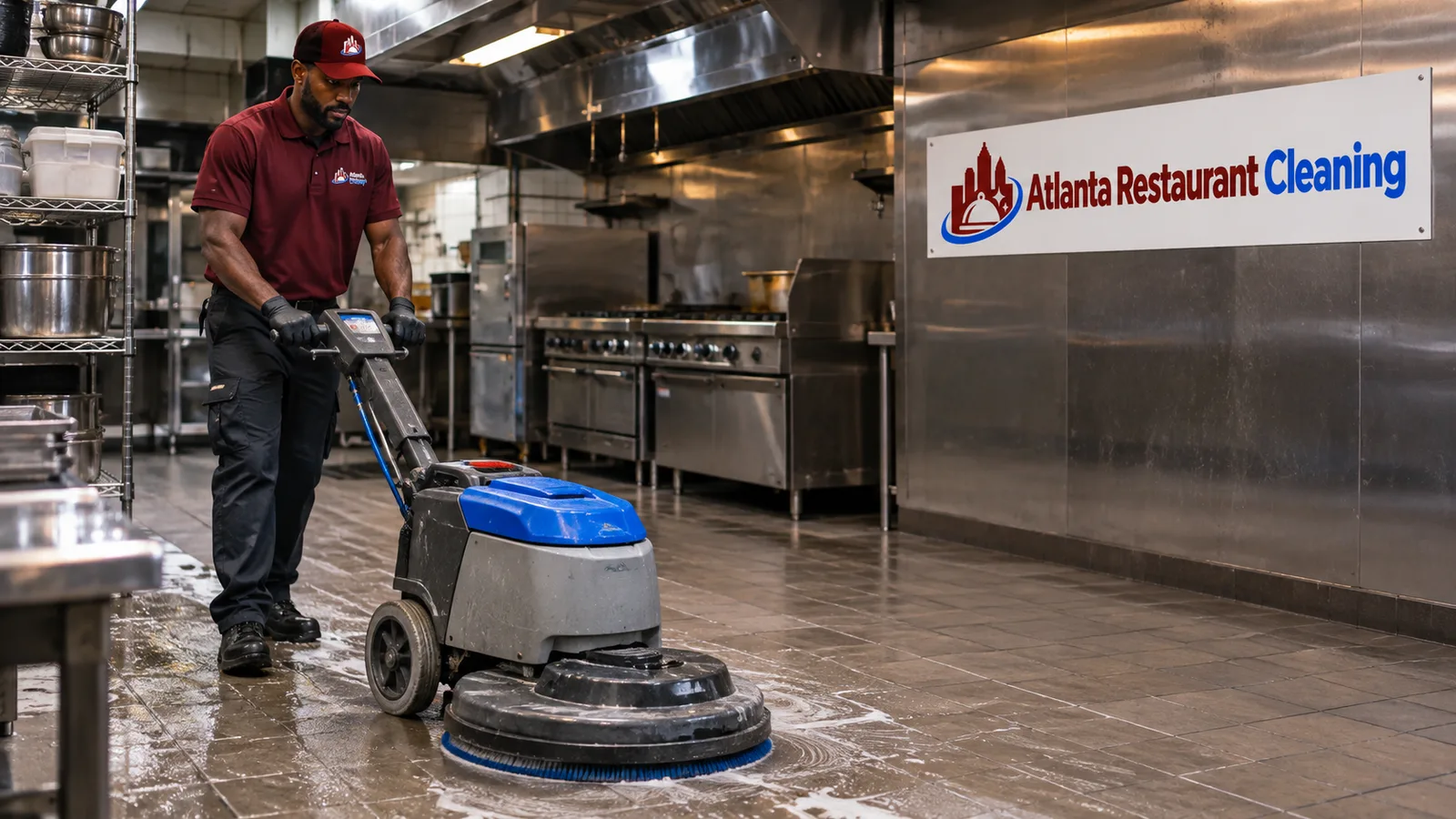
Commercial Kitchen Floor Cleaning targets the greasy film and compacted soil that routine mopping can leave on tile, grout, edges, and other washable hard flooring. Atlanta Restaurant Cleaning uses commercial degreasers, agitation, and controlled soil recovery to clean the floor more thoroughly than a mop-and-bucket routine.
Grease can spread well beyond the cooking line. Fryer splash, tracked cooking oil, food particles, and dirty mop water collect near equipment, sinks, prep stations, coolers, and traffic lanes. Grout joints often darken because their recessed, porous surface holds residue. Cleaning should address those deposits rather than adding more detergent over them.
We bring an experienced restaurant team in Atlanta to each project, planning the work around the way commercial kitchens operate. That includes confirming floor material, identifying heavy-soil zones, coordinating access, and allowing adequate drying time before staff return. Kitchens near the event and entertainment activity around Downtown may need late service windows, while high-volume dining areas in Midtown or Buckhead may benefit from recurring cleaning between deeper periodic services.
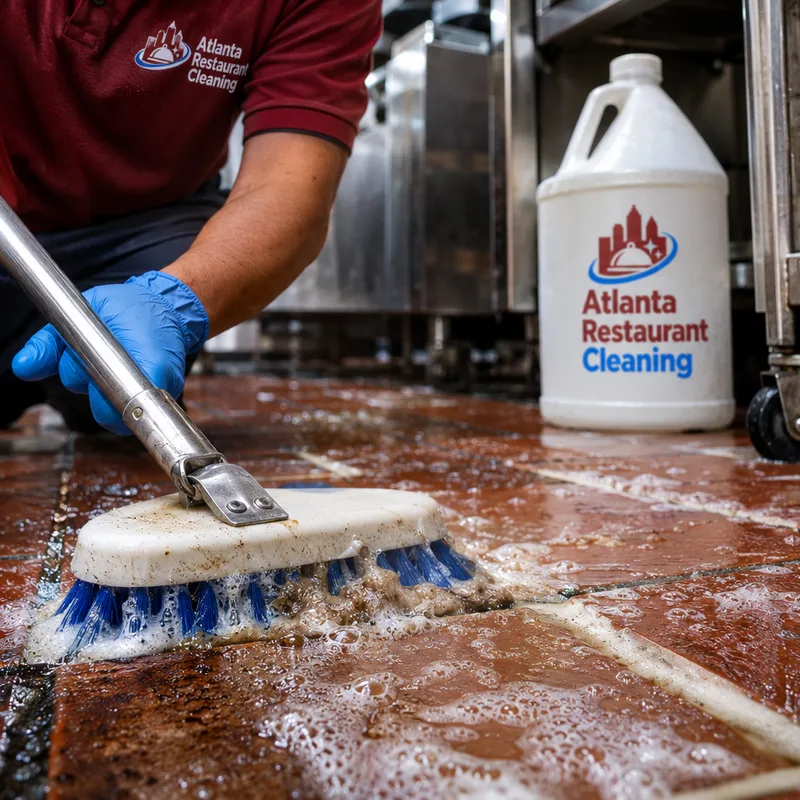
Restaurant tile cleaning requires the right chemistry, dwell time, and agitation. A degreaser must stay on the surface long enough to loosen oily soil, but it also has to be suitable for the floor material and used at the correct dilution. Mechanical scrubbing then breaks residue away from textured tile and recessed grout lines. The loosened soil is recovered rather than pushed into corners or drains.
Extra attention goes to common trouble spots: the perimeter of fryers and ranges, routes between prep and cooking stations, dishwashing areas, walk-in entrances, floor edges, and spaces beneath movable equipment. These areas often contain several layers of residue, including oil, protein soil, detergent film, and tracked dirt.
Restaurant grout cleaning can improve the appearance of grout that has darkened from embedded soil. It cannot reverse permanent discoloration, damaged grout, missing joints, or staining that has penetrated beyond what cleaning can remove. We inspect representative areas first and set realistic expectations based on the surface condition.
Commercial degreasing chemistry is matched to the floor and soil load, then given controlled dwell time so oily buildup can be scrubbed and recovered.
Mechanical equipment and detail tools work textured tile, grout joints, floor edges, corners, and other places that broad mopping does not clean well.
Service concentrates on cooking lines, dish areas, prep routes, cooler entrances, and other paths where grease and tracked soil accumulate.
Suspended grime and spent cleaning solution are collected from the floor. This limits the redistribution of dirty water and detergent residue.
One-time deep cleaning can reset a neglected floor. Recurring service helps control buildup before it becomes harder to remove.
Visible concerns such as loose tile, open grout joints, damaged transitions, or areas affected by equipment access are identified before or during service.
We identify the flooring type, grease concentration, grout condition, drainage points, access limits, and equipment that can be moved safely. A small test area may be used when material compatibility or staining is uncertain.
Loose debris is removed, accessible items are cleared, and sensitive surfaces are protected as needed. The work plan accounts for active equipment, floor transitions, and routes needed by restaurant staff.
A suitable degreasing solution is applied at the proper dilution. Controlled dwell time lets the chemistry soften grease and food soil without allowing the solution to dry on the floor.
Commercial floor equipment scrubs open areas while detail tools address grout joints, corners, edges, and accessible spaces around equipment.
The loosened residue is recovered, and the surface is rinsed as appropriate to remove spent chemistry and remaining soil. Additional passes are made in heavily affected zones when needed.
We review the cleaned area, address remaining treatable spots, and leave the floor to dry before normal traffic resumes. Staff receive practical guidance on keeping mop water, tools, and detergent dilution under control.
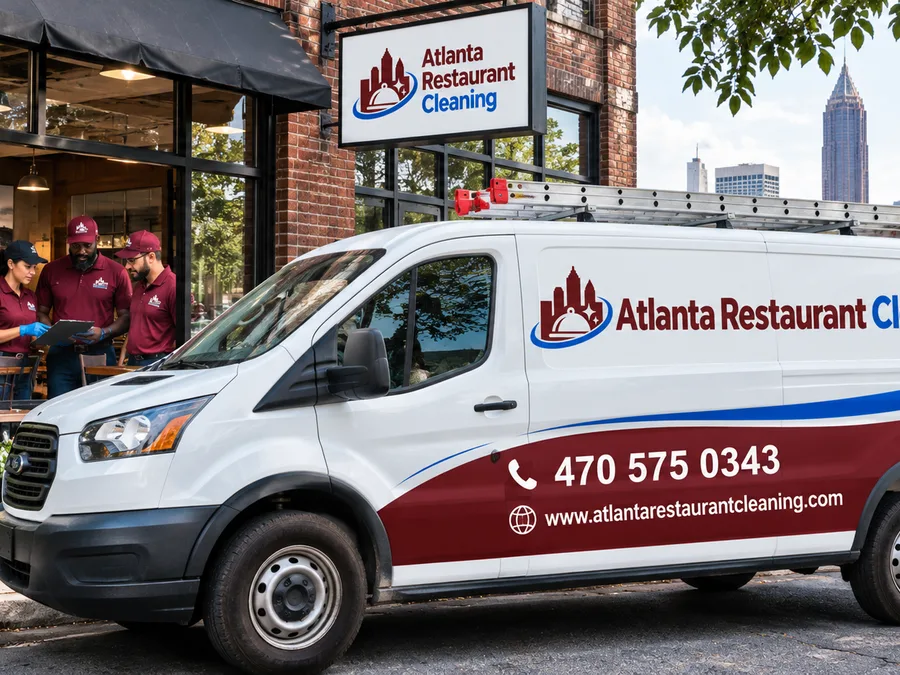
Restaurant floor cleaning should fit the operating calendar. The best service window usually begins after cooking has stopped, loose food has been removed, and staff no longer need to cross the work area. Overnight, early-morning, and closed-day appointments may be practical depending on the restaurant's hours and the amount of drying time available.
Atlanta dining districts present different access needs. Downtown kitchens near hotels, arenas, and event traffic may require careful arrival planning and secured loading access. Midtown restaurants often have limited service alleys or shared building access. In Buckhead, mixed-use properties may impose delivery rules or elevator schedules. West Midtown restaurants in converted commercial buildings can have varied floor layouts, thresholds, and utility access. These details are confirmed before crews and equipment arrive.
Warm, humid conditions can slow drying in a poorly ventilated kitchen. Air movement, indoor temperature, floor texture, and the amount of rinse water all affect when the surface is ready for traffic. We avoid promising a universal drying time and instead assess conditions at the service visit.
The appropriate schedule depends on production volume, menu, floor texture, ventilation, equipment layout, and the kitchen's daily floor-care routine. Frying and high-volume cooking usually create a different grease load than a bakery, coffee shop, or light-prep kitchen. Textured quarry tile and deep grout joints may also retain more soil than a smooth, well-maintained surface.
A one-time restaurant floor degreasing service is useful when buildup has become visible, a floor feels tacky after mopping, or a location needs a thorough reset. Recurring service is better when grease returns quickly around the line or grout darkens between deep cleanings. The schedule can be adjusted after the first visit once the actual soil load and cleaning response are known.
Daily staff care still matters. Use clean mop heads, change dirty solution before it becomes gray or oily, follow the chemical manufacturer's dilution instructions, and keep separate tools for kitchen floors when possible. Too much detergent can leave a film that attracts soil. Deep cleaning supports daily care; it does not replace prompt spill removal or the restaurant's normal sanitation procedures.
Tell us about your flooring, kitchen hours, and heaviest grease areas so we can prepare a clear cleaning scope and a practical service window.
Call for a Free QuotePricing depends on cleanable square footage, soil level, flooring type, equipment access, and whether the service is one-time or recurring. A compact kitchen with open tile costs less to service than a large cooking line with heavy buildup, deep grout, and extensive detail work. After-hours access, parking, loading restrictions, and movable equipment also affect labor. Atlanta Restaurant Cleaning confirms the exact cost after reviewing the work area and requested schedule.
Removing grease and detergent film can improve traction when those contaminants are causing the slick condition, but cleaning cannot correct damaged flooring or an unsuitable surface. Grease must be loosened, scrubbed, and recovered instead of spread with dirty mop water. Ongoing spills, leaking equipment, worn tile, poor drainage, and damaged grout require separate correction. Any floor may remain slippery while wet, so the work area must stay controlled until dry.
Many restaurant kitchens require several hours for preparation, degreasing, agitation, recovery, rinsing, and drying, although the actual duration depends on size and condition. Heavy buildup and detailed grout work take longer than maintenance cleaning. Shared loading areas and restricted building access in Midtown or Downtown can also affect scheduling. A service window is set after the kitchen layout and operating hours are reviewed.
Movable racks, mats, bins, and small items should usually be cleared so the floor can be cleaned thoroughly. Heavy, connected, hot, or gas-fired equipment should remain in place unless qualified restaurant personnel arrange safe disconnection and movement. We clean accessible areas around stationary equipment and identify blocked areas when reviewing the scope.
Professional cleaning can remove embedded grease and soil, but it cannot guarantee the original grout color. Permanent staining, chemical damage, worn grout, and discoloration beneath the surface may remain after cleaning. A test area provides the best indication of likely improvement. Missing or crumbling grout needs repair rather than stronger cleaning.
Commercial kitchen floors are generally best cleaned when cooking has stopped and staff can stay out of the work zone. Degreaser, powered equipment, hoses, recovered soil, and a wet floor are difficult to manage safely around active food production. Atlanta restaurants with late hours can arrange a window after closing, before opening, or during a planned shutdown.
The schedule should be based on how quickly grease returns, not a fixed interval applied to every kitchen. Fryer-heavy operations may need recurring deep cleaning more often than light-prep locations. Menu, volume, grout depth, floor texture, and daily mopping practices all matter. The condition observed after the first cleaning helps establish a practical maintenance frequency.
Remove loose food, personal items, floor mats, and movable objects from the scheduled area, then confirm that cooking has ended and hot equipment is secure. Staff should also identify sensitive flooring, known leaks, damaged grout, restricted drains, and building access rules. Clear preparation gives the crew more time to work on the tile and grout.
Share the floor type, approximate kitchen size, operating hours, and problem areas with Atlanta Restaurant Cleaning. We will outline the work, access needs, and scheduling options before service begins.