
Back-of-House Floors
Degreasing and scrubbing target cooking residue, tracked soil, corners, edges, and approved areas beneath movable equipment. The floor type and manufacturer guidance determine the product and method.
Serving Atlanta, Georgia & surrounding areas
Open 24/7
Reliable kitchen, dining room, and restroom care planned around your operating hours, sanitation priorities, and inspection standards.
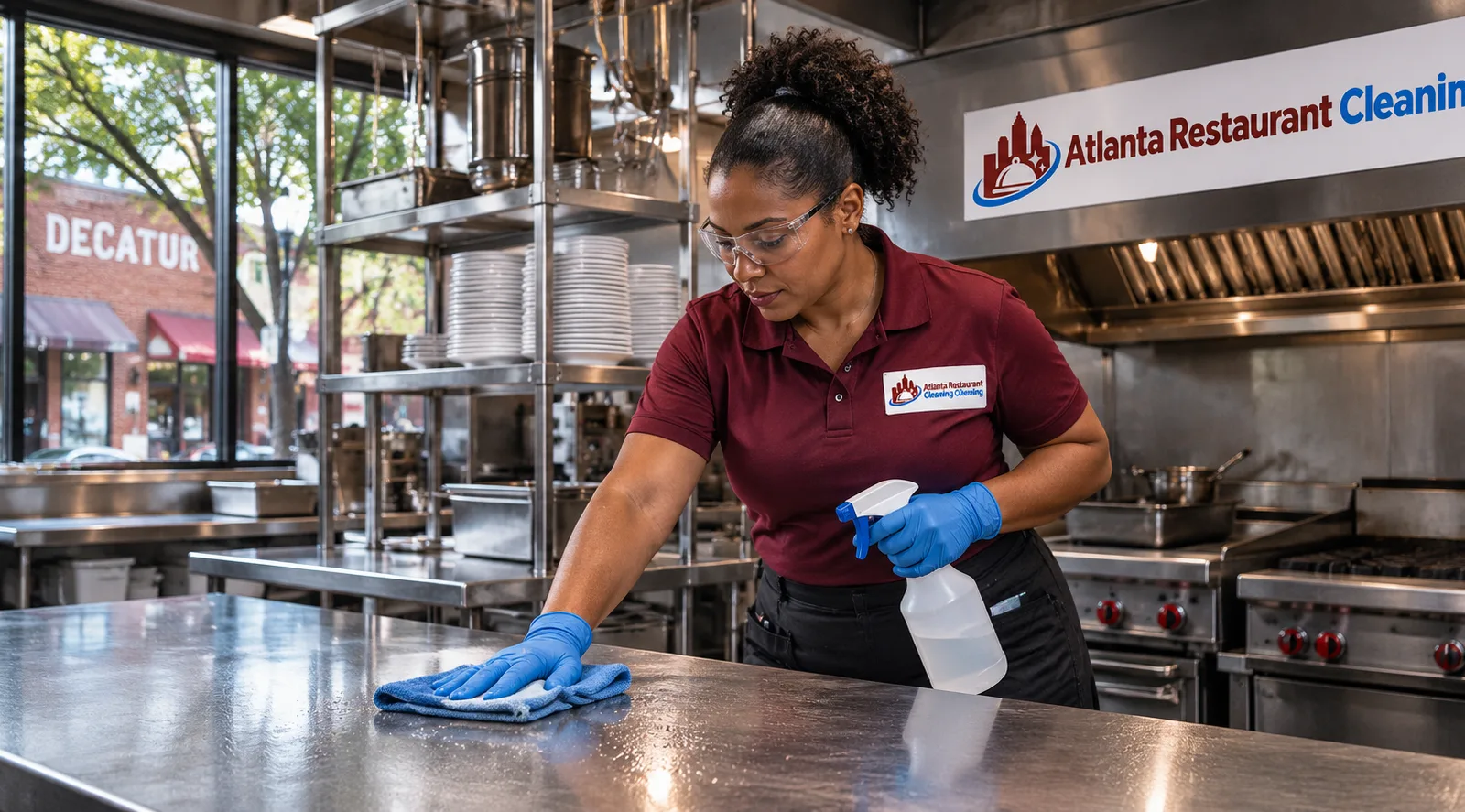
Restaurant Cleaning Decatur requires more than a quick pass over visible surfaces. Grease settles on floors and equipment exteriors, crumbs collect beneath furniture, and busy restrooms can change condition quickly. Atlanta Restaurant Cleaning develops a written scope around your layout, service volume, and operating schedule so the work is consistent from one visit to the next.
Our team cleans restaurants near Downtown Decatur, where frequent guest turnover can put extra pressure on dining floors and restrooms. In Oakhurst, neighborhood restaurants often need crews to work within compact dining rooms and limited back-of-house space. Restaurants around the East Lake MARTA station may experience concentrated traffic around commuting and event periods. Each location needs a practical plan rather than a generic checklist.
Our restaurant specialists serving Atlanta, GA coordinate kitchen, front-of-house, and restroom tasks without interfering with food preparation or guest service. Before recurring work begins, we identify access instructions, alarm procedures, priority areas, approved products, and the person responsible for reviewing completed work.
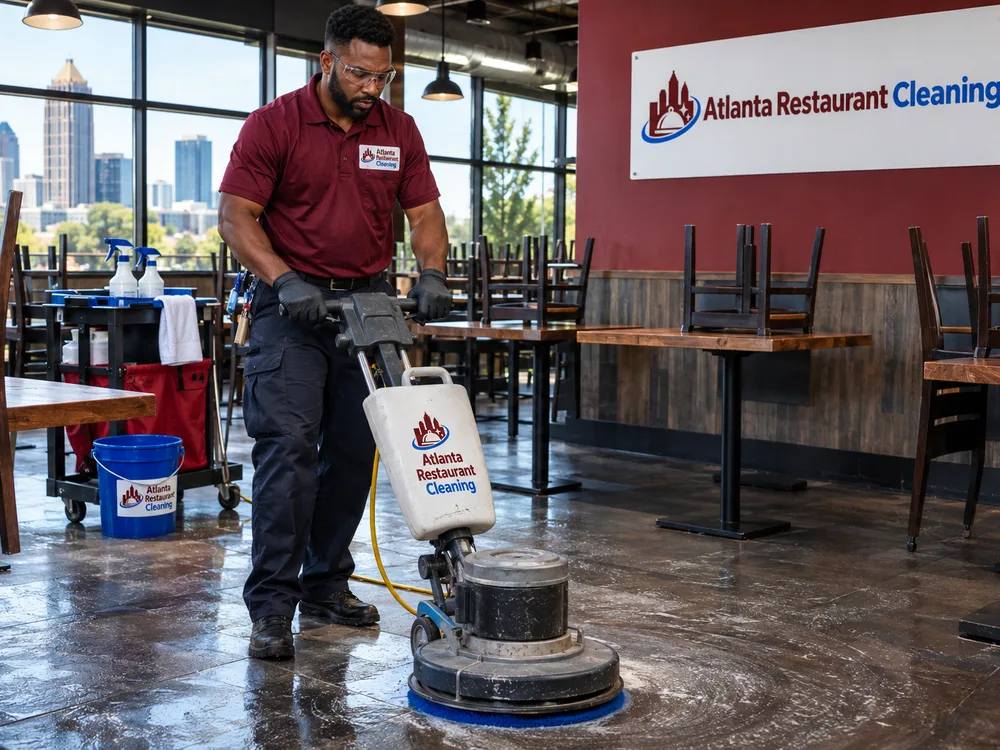
A sound cleaning plan separates food-contact work, general back-of-house cleaning, dining-area care, and restroom cleaning. That separation matters because tools used around toilets or restroom floors should never move into kitchens or dining spaces. Color-coded microfiber cloths, dedicated mop heads, labeled containers, and clear storage practices help reduce cross-contamination risk.
Kitchen service can include degreasing floors, cleaning baseboards, wiping equipment exteriors, scrubbing washable wall surfaces, and addressing soil beneath movable items when access is authorized. Food debris must be removed before sanitizing because soil can interfere with sanitizer contact. Food-contact surfaces also require products used according to their labels, including the stated dilution and contact time.
Front-of-house work covers tables and seating as assigned, floor edges, entry glass, touchpoints, and the areas beneath accessible furniture. The objective is a clean room at opening, including the less visible edges that become noticeable in daylight or under dining-room lighting.
Degreasing and scrubbing target cooking residue, tracked soil, corners, edges, and approved areas beneath movable equipment. The floor type and manufacturer guidance determine the product and method.
Scheduled care can address hard floors, carpeted areas, entry glass, seating, ledges, baseboards, and high-touch surfaces without leaving the room smelling heavily of chemicals.
Fixtures, partitions, mirrors, dispensers, touchpoints, and floors receive a defined cleaning and disinfection routine with restroom-only tools.
Low-frequency tasks may include floor machine scrubbing, grout attention, high dusting in accessible areas, vent exterior cleaning, and detailed work behind approved movable items.
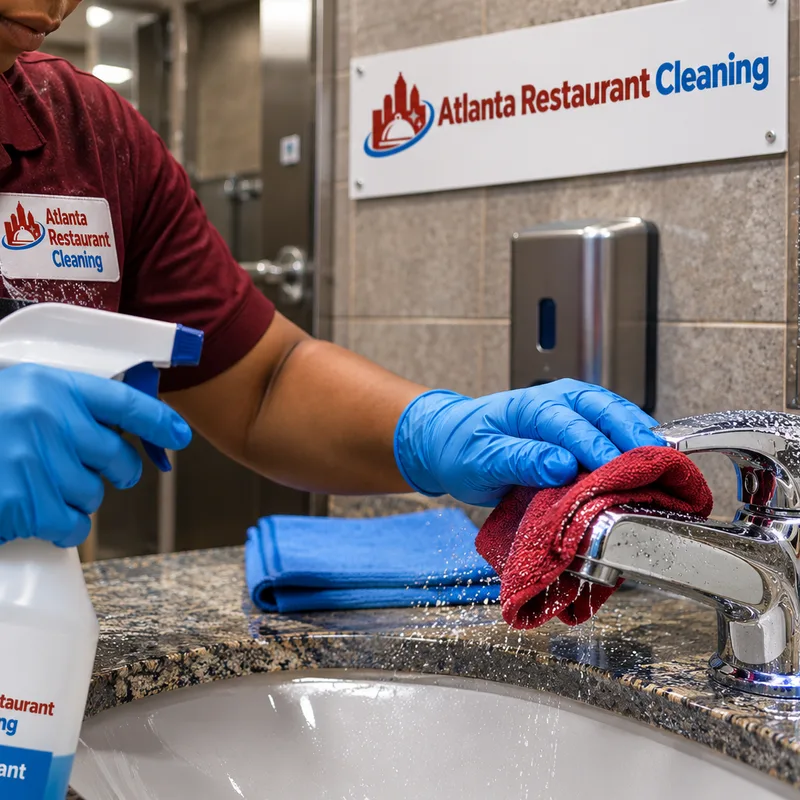
Restaurant Bathroom Cleaning Decatur should address hygiene, odor sources, supply condition, and presentation during every scheduled visit. The work starts by removing waste and visible soil. Cleaners then address toilets, urinals, sinks, faucets, counters, partitions, mirrors, door hardware, dispensers, and floors according to the agreed scope.
Cleaning and disinfecting are different steps. A disinfectant works correctly only when it is used on a compatible surface, mixed as directed, and left visibly wet for the label's required contact time. Applying it and wiping it away immediately may not provide the intended result. Our process accounts for this time while keeping restroom tools separate from all kitchen and dining-area equipment.
Persistent odor often comes from residue around fixture bases, grout lines, floor drains, wall edges, or waste receptacles rather than the air itself. Detail cleaning targets the source. If a drain, plumbing leak, or damaged seal appears to be involved, the condition is documented so restaurant management can arrange the appropriate repair.
We review the kitchen, dining room, entrances, restrooms, storage constraints, surface types, access points, and areas that require special handling.
The written plan identifies what is cleaned on every visit, what receives periodic attention, which areas are excluded, and who supplies consumables such as soap, paper products, and liners.
Service is arranged around closing, opening, deliveries, prep work, and security procedures. Decatur traffic and the restaurant's actual operating rhythm are considered when setting a workable arrival window.
Crews follow the agreed task order, use dedicated restroom equipment, observe product labels, and avoid mixing chemicals or moving unauthorized equipment.
Management feedback and recurring trouble spots are recorded. The scope can be updated when menus, seating layouts, service volume, or operating hours change.
Restaurant cleaning proposals should describe frequency and scope in plain terms. Square footage matters, but it does not tell the whole story. Pricing and labor also depend on floor condition, grease accumulation, restroom count, furniture density, equipment access, service frequency, parking and loading conditions, and the amount of periodic detail work required.
Recurring maintenance is different from an initial reset. A restaurant with heavy buildup may need a deeper first visit before routine service can hold the space at the agreed standard. Identifying that condition during the walkthrough gives management a realistic starting plan.
Product selection matters as well. Degreasers, neutral floor cleaners, glass cleaners, sanitizers, and disinfectants have different jobs. Chlorine-based products should never be mixed with ammonia or acids, and Safety Data Sheets should be available for the chemicals used in the workplace. We also discuss sensitive materials such as natural stone, sealed wood, specialty flooring, and stainless steel so incompatible products are not used.
Get a written restaurant cleaning scope built around your Decatur location, operating hours, and highest-priority sanitation needs.
Call for a Free QuoteRestaurant cleaning is usually priced after a walkthrough because labor needs vary widely by layout and condition. The main cost drivers are cleanable square footage, kitchen grease levels, restroom count, floor type, service frequency, access restrictions, and whether the first visit requires a deeper reset. A written proposal should distinguish routine tasks from periodic detail work.
Yes, service can be arranged around closing, opening, and food-preparation schedules when building access and security procedures permit. For restaurants near Downtown Decatur or MARTA, the plan should also account for parking, loading access, and late-night entry instructions. The agreed arrival window and key or alarm process are documented before work begins.
The right frequency depends on guest volume, operating hours, fixture count, and the restaurant's in-house checks during service. A scheduled professional visit can provide a full cleaning and disinfection routine, while staff may still need to inspect supplies, spills, waste, and fixture condition throughout operating hours. High-traffic restrooms often require more frequent attention than low-volume spaces.
Yes, both areas can be included in one scheduled visit when the scope and timing allow it. Separate, color-coded tools should be used for kitchens, dining spaces, and restrooms to reduce cross-contamination risk. Food, utensils, and exposed preparation items must be secured before cleaning begins.
Food-contact surfaces can be included when they are identified in the written scope and accessible for service. Visible food and grease are removed first, then an appropriate sanitizer is applied according to its label, including dilution and contact time. Restaurant management should confirm which surfaces remain the responsibility of kitchen staff and which are assigned to the cleaning crew.
A first visit can make substantial progress, but heavy buildup may require an initial deep cleaning or a staged plan. Grease inside inaccessible equipment, damaged grout, plumbing faults, failed seals, and absorbent materials can limit what surface cleaning can correct. The walkthrough identifies likely constraints before the scope is approved.
Secure food, utensils, cash, and confidential materials, then clear approved work areas of loose items. Management should also provide current access instructions, identify surfaces needing special care, and disclose active leaks, damaged flooring, or equipment that cannot be moved. Clear preparation helps the crew spend the scheduled time on cleaning rather than waiting for access.
Tell Atlanta Restaurant Cleaning about your kitchen, dining areas, restrooms, operating schedule, and current trouble spots. We will help define a practical scope for consistent care.