Commercial kitchen service · Atlanta

Commercial Kitchen Cleaning Services in Atlanta

Remove baked-on grease, food residue, and buildup with a cleaning scope planned around your equipment, operating hours, and priority areas.

✓Written cleaning scope
✓Equipment-aware planning
✓Atlanta restaurant service
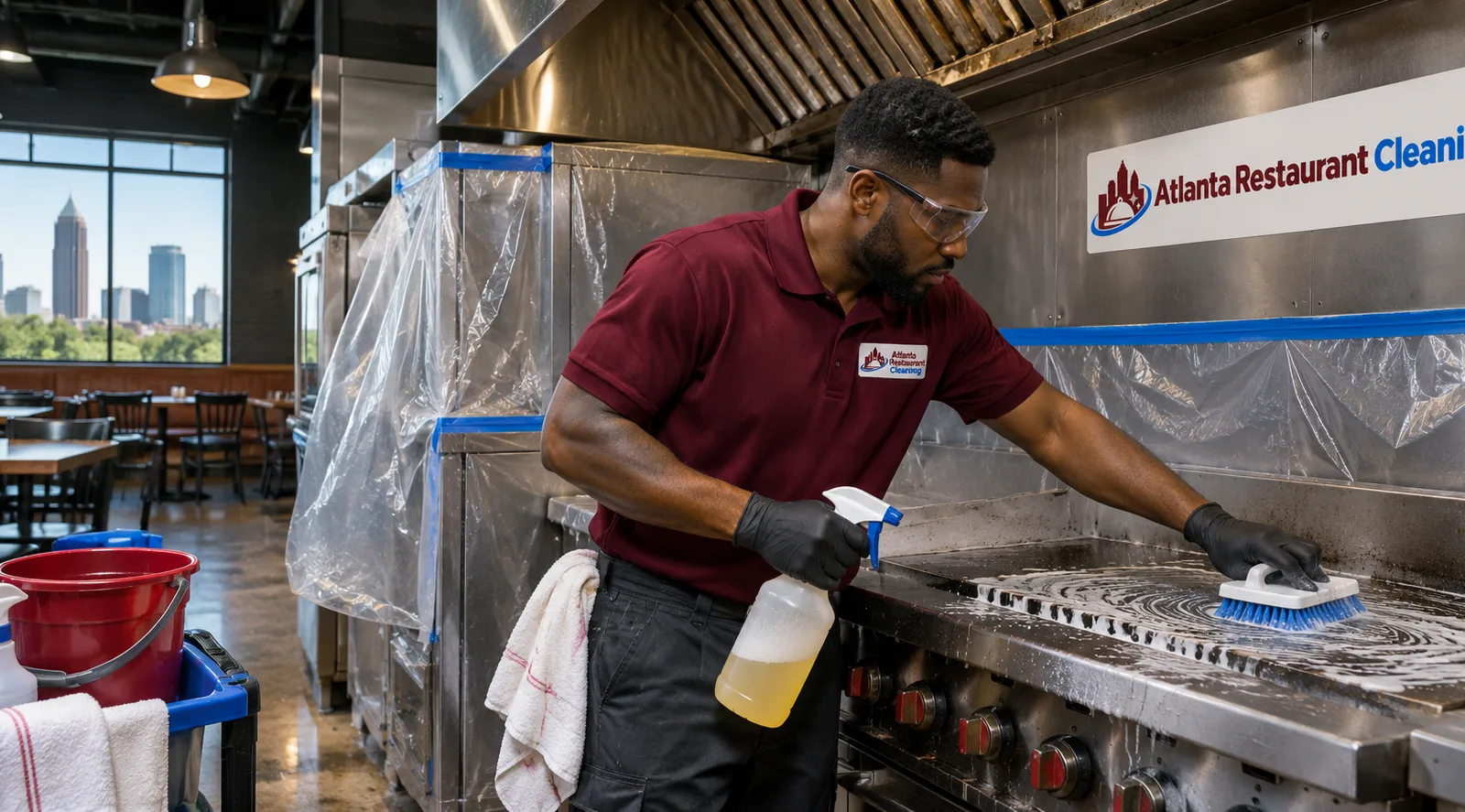
A professional cleaner degreasing stainless steel cooking equipment in an Atlanta restaurant kitchen while surrounding surfaces are protected.

A Cleaner Kitchen Without Disrupting Service

Commercial Kitchen Cleaning Services address the grease and residue that routine closing work cannot fully remove. Atlanta Restaurant Cleaning cleans cooking lines, equipment exteriors, floors, walls, prep surfaces, and other agreed areas according to a written scope. The plan can focus on a specific problem or cover a coordinated commercial kitchen deep cleaning.

As Atlanta's local restaurant service, we plan the work around the kitchen rather than treating every facility alike. A compact line in a Downtown Atlanta restaurant has different access and scheduling needs than a larger freestanding operation in Buckhead. Kitchens serving event traffic near Mercedes-Benz Stadium may also need work scheduled between busy dates. We account for equipment layout, grease levels, floor condition, ventilation access, and the time needed for surfaces to dry before food preparation resumes.

The goal is straightforward: clearly defined work, careful cleaning, and a kitchen returned in orderly condition. Before cleaning begins, confirm which appliances can be moved, which utilities may be shut off, and whether any equipment requires service by a qualified technician.

Request a Callback
Cleaning scope

What Our Kitchen Cleaning Services Can Cover

Cooking Line and Grill Cleaning

Griddles, charbroilers, ranges, fryers, and surrounding surfaces collect carbonized food and grease. Grill cleaning in Atlanta may include removable components, backsplashes, equipment sides, and accessible areas beneath the line, based on the agreed scope and manufacturer guidance.

Kitchen Equipment Cleaning

Professional kitchen cleaning can address stainless steel exteriors, prep tables, shelving, sinks, refrigeration exteriors, and other accessible equipment surfaces. Sensitive controls, electrical components, gas connections, and manufacturer restrictions are identified before work starts.

Floors, Walls, and Hard Surfaces

Degreasing may include quarry tile, sealed hard floors, wall panels, base edges, splash areas, and floor-to-equipment gaps. The method depends on the surface, soil level, drainage, slip concerns, and whether standing water is permitted.

Hood and Filter Areas

Restaurant hood cleaning in Atlanta can involve visible canopy surfaces and removable filters when included in the scope. Exhaust ducts, fans, and fire-suppression components require the correct access, procedures, and qualified service arrangements.

Grease Trap Areas

Cleaning around an accessible grease interceptor can remove spills and residue from surrounding floors and surfaces. Grease trap cleaning in Atlanta that includes pumping, hauling, or disposal must be handled under a separately confirmed waste-service scope.

Detailed and Recurring Cleaning

Door edges, casters, equipment legs, shelving joints, and other overlooked areas can be added to a detailed service. Recurring plans can rotate deep-cleaning tasks while routine staff sanitation remains part of daily kitchen operations.

Commercial Kitchen Deep Cleaning Built Around the Facility

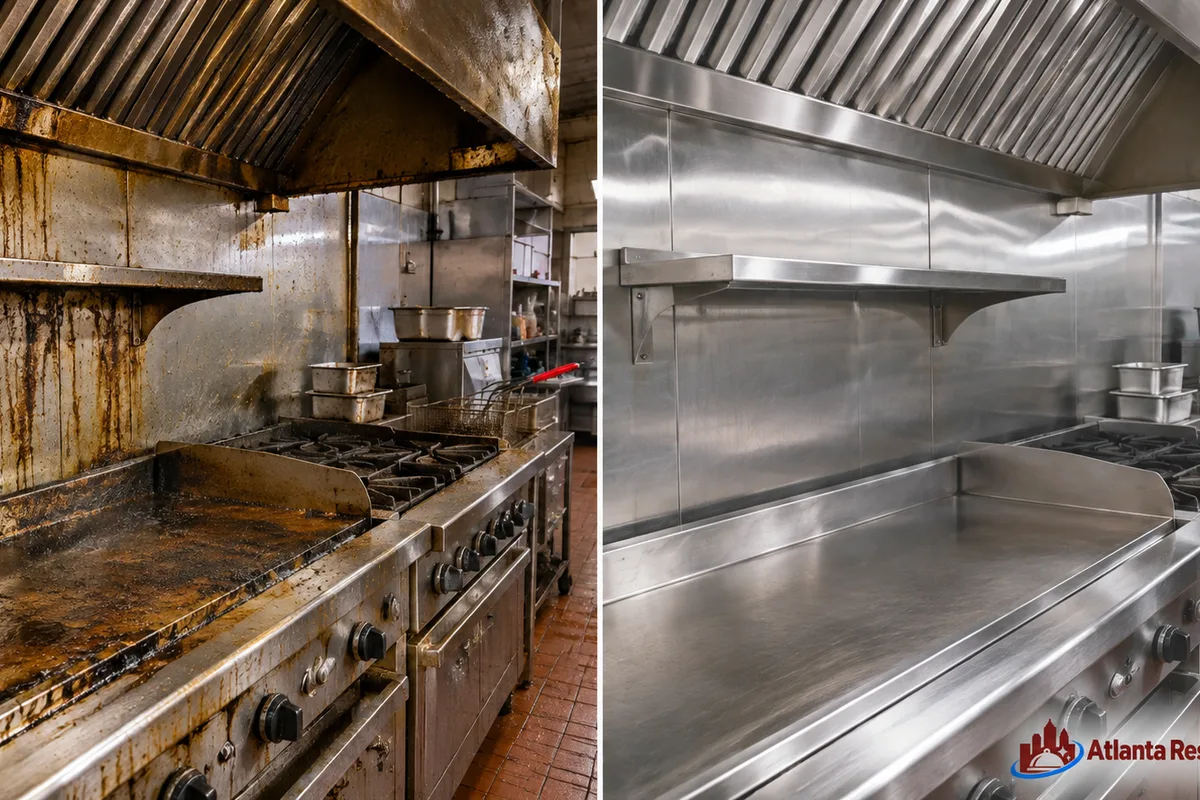
A side-by-side view of a grease-coated commercial cooking line and the same accessible stainless steel surfaces after detailed degreasing and cleaning.
Detailed cleaning targets accessible grease and carbon buildup around the cooking line.

A useful scope begins with the actual soil and the material underneath it. Heavy grease may require dwell time with a compatible degreaser before agitation and recovery. Carbon deposits on cooking equipment may need careful scraping with tools that will not damage the surface. Stainless steel should be cleaned with its grain, while painted surfaces, aluminum, stone, and electrical controls need different treatment.

Heat and humidity affect scheduling in Atlanta kitchens. After pressure or wet cleaning, floors and equipment areas need enough ventilation and drying time before staff return. Water control also matters in multitenant properties such as restaurant spaces in Midtown, where overspray or uncontrolled runoff can affect adjacent areas. In older commercial buildings around Castleberry Hill, tight utility routes and limited equipment clearances may require more hand detailing and less reliance on large machines.

Professional cleaning supports sanitation work, but the terms are not interchangeable. Cleaning removes grease, soil, and food residue. Sanitizing follows cleaning on appropriate food-contact surfaces using a product and contact time suited to the operation's food-safety procedures. Our scope states what will be cleaned so management can coordinate any required sanitizing before production resumes.

Service process

How Restaurant Kitchen Cleaning Works

  1. Step01

    Assess the Kitchen

    We discuss the facility type, cooking equipment, problem areas, operating schedule, access, and expected outcome. Photos or an on-site review may be needed when grease is heavy or equipment must be moved.

  2. Step02

    Define the Written Scope

    The scope identifies included surfaces, exclusions, access requirements, and who handles equipment shutdown, utility isolation, food removal, filter handling, waste, and post-clean sanitizing. It also establishes the planned service window.

  3. Step03

    Prepare the Work Area

    Food, utensils, disposable goods, and exposed ingredients must be removed or protected. Cleaners isolate the work zone, place floor protection where appropriate, and check that surfaces have cooled before applying products.

  4. Step04

    Degrease and Detail

    The team applies surface-compatible products, allows proper dwell time, agitates residue, and cleans the agreed equipment and structural surfaces. Soil and wastewater are contained and handled according to the facility plan.

  5. Step05

    Review the Completed Scope

    Accessible areas are checked against the work order. Management can review any stains, damaged finishes, inaccessible spaces, or maintenance concerns that cleaning could not correct before the kitchen returns to normal use.

Pricing factors

How Much Do Commercial Kitchen Cleaning Services Cost in Atlanta?

Commercial kitchen cleaning in Atlanta typically ranges from $500 to $2,500 for a scheduled deep clean, while large kitchens, heavy grease, or extensive equipment detailing may cost $3,000 or more. A limited cooking-line or appliance-focused visit may fall below that range.

Final pricing depends on kitchen size, grease and carbon buildup, equipment quantity, access beneath appliances, service timing, and whether hood, filter, or grease-interceptor work is included. Moving equipment, overnight scheduling, and wastewater controls can also affect labor. Exact cost is confirmed after the kitchen and requested scope are reviewed.

Request a Callback

Restaurant Kitchen Cleaners for Atlanta Operations

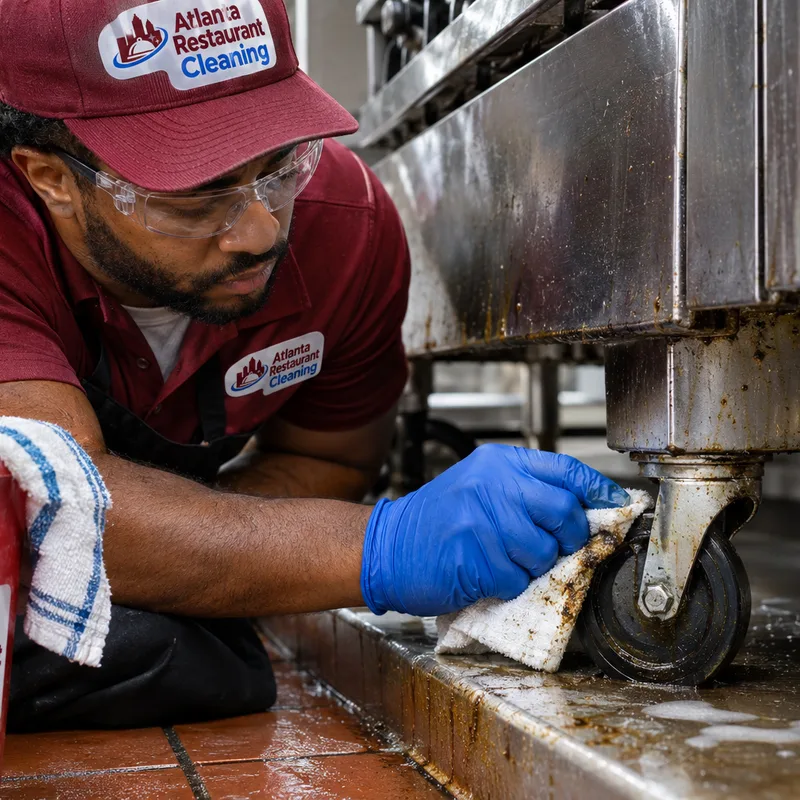
Close view of a technician hand-cleaning grease from caster wheels, equipment legs, and the floor edge beneath a commercial range.
Edges, casters, and equipment gaps are defined in the scope before work begins.

Restaurants near major employment and visitor districts often have narrow maintenance windows. Downtown kitchens may need overnight work after late service, while Buckhead dining rooms may prefer cleaning between operating days. In Midtown, shared loading areas and building access rules can determine when equipment and cleaning tools enter the property. Scheduling should account for cooling hot equipment, cleaning time, drying, and the kitchen's own sanitation checks.

Atlanta Restaurant Cleaning can plan a one-time reset before an inspection, opening, management change, or seasonal rush. Recurring kitchen cleaning services are better suited to facilities that want grease-prone areas handled on a set rotation. The right interval depends on menu, cooking volume, equipment arrangement, and the amount of daily detail work performed by staff.

A kitchen cleaning company should be specific about boundaries. Cleaning cannot repair corroded metal, failed grout, damaged floor coatings, leaking equipment, or faulty ventilation. Heavy buildup can also hide worn seals and damaged finishes. Those conditions should be documented for repair rather than concealed with polish or left unexplained.

Scope boundaries

Hood, Grill, and Grease Area Scope Matters

Requests for restaurant hood cleaning in Atlanta, GA can mean very different things. Wiping the visible canopy and washing removable baffle filters is not the same as cleaning the complete exhaust system. A full exhaust scope may involve the plenum, ductwork, rooftop fan, access panels, and documentation. Fire-suppression nozzles and links should not be disturbed by general kitchen cleaning. Confirm the exact components included and whether specialized exhaust-system service is required.

The same clarity applies to grills and grease interceptors. Grill cleaning may cover cooled cooking surfaces, removable parts, grease drawers, backsplashes, and accessible surrounding areas. It does not imply repair, calibration, or disassembly that conflicts with manufacturer instructions. Cleaning the floor and exterior around a grease trap is also different from pumping and transporting grease waste.

Ask how chemicals are selected, how wastewater will be controlled, and what must be removed before arrival. The Georgia Department of Public Health publishes food-service rules, while local inspection and permitting responsibilities can depend on the facility's jurisdiction. Operators remain responsible for their food-safety program, equipment maintenance, and any required specialized services.

Request a Callback

Describe the kitchen, equipment, grease conditions, and preferred service window to receive a scope that matches the work instead of a vague cleaning allowance.

Call for a Free Quote
Common questions

Commercial Kitchen Cleaning Questions

How long does restaurant kitchen cleaning take?+

A focused equipment cleaning may take several hours, while a full deep clean can require an overnight shift or a longer shutdown. Kitchen size, buildup, access, equipment cooling time, and drying needs determine the schedule. Atlanta restaurants with shared loading docks or building access limits should include those restrictions during planning.

Can cleaning be scheduled after the restaurant closes?+

Yes, commercial kitchen deep cleaning can often be planned after service or on a closed day. The work window must allow hot equipment to cool and cleaned areas to dry before food preparation starts. Downtown and Midtown properties may also impose loading, parking, elevator, or overnight access rules.

Do you clean behind and beneath kitchen equipment?+

Yes, accessible spaces behind and beneath equipment can be included when movement is safe and agreed in advance. Management should identify hard utility connections, gas appliances, floor-mounted units, and manufacturer restrictions. Cleaners should not disconnect gas, electrical, refrigeration, or fire-suppression components unless qualified and specifically authorized.

Is restaurant hood cleaning included with kitchen cleaning?+

Visible canopy surfaces and removable filters may be included, but complete exhaust-system cleaning is a distinct scope that must be confirmed. Ducts, plenums, fans, rooftop access, and fire-suppression components require proper procedures. Ask for a component-by-component description when requesting restaurant hood cleaning in Atlanta.

Does grease trap cleaning include pumping the trap?+

Pumping is included only when waste removal and disposal are explicitly part of the quoted scope. Surface cleaning around an interceptor does not remove its internal contents. Atlanta operators should identify whether they need spill cleanup, exterior cleaning, internal service, or pumping so the correct work can be arranged.

How should we prepare for professional kitchen cleaning?+

Remove food, cookware, utensils, paper goods, and portable items from the work area before the scheduled start. Cool cooking equipment, identify sensitive surfaces, and confirm utility or alarm procedures with management. Staff should also reserve time after cleaning for any food-contact sanitizing required by the facility's plan.

How often should a commercial kitchen be deep cleaned?+

The interval should be based on cooking volume, menu, grease production, equipment layout, and the effectiveness of daily cleaning. A high-output fry or grill line usually needs detail work more often than a light-preparation kitchen. An initial Atlanta facility review can identify areas suited to weekly, monthly, quarterly, or one-time attention.

Can you remove every stain and carbon mark?+

No, cleaning cannot guarantee removal of permanent discoloration, corrosion, etched finishes, burned coatings, or damage beneath old buildup. A test area can help determine how the surface will respond. Any remaining marks or maintenance issues should be documented during the final review.

Plan a Cleaner, More Manageable Kitchen

Tell Atlanta Restaurant Cleaning about your equipment, priority areas, access limits, and operating schedule. We will help define a practical cleaning scope before work is scheduled.